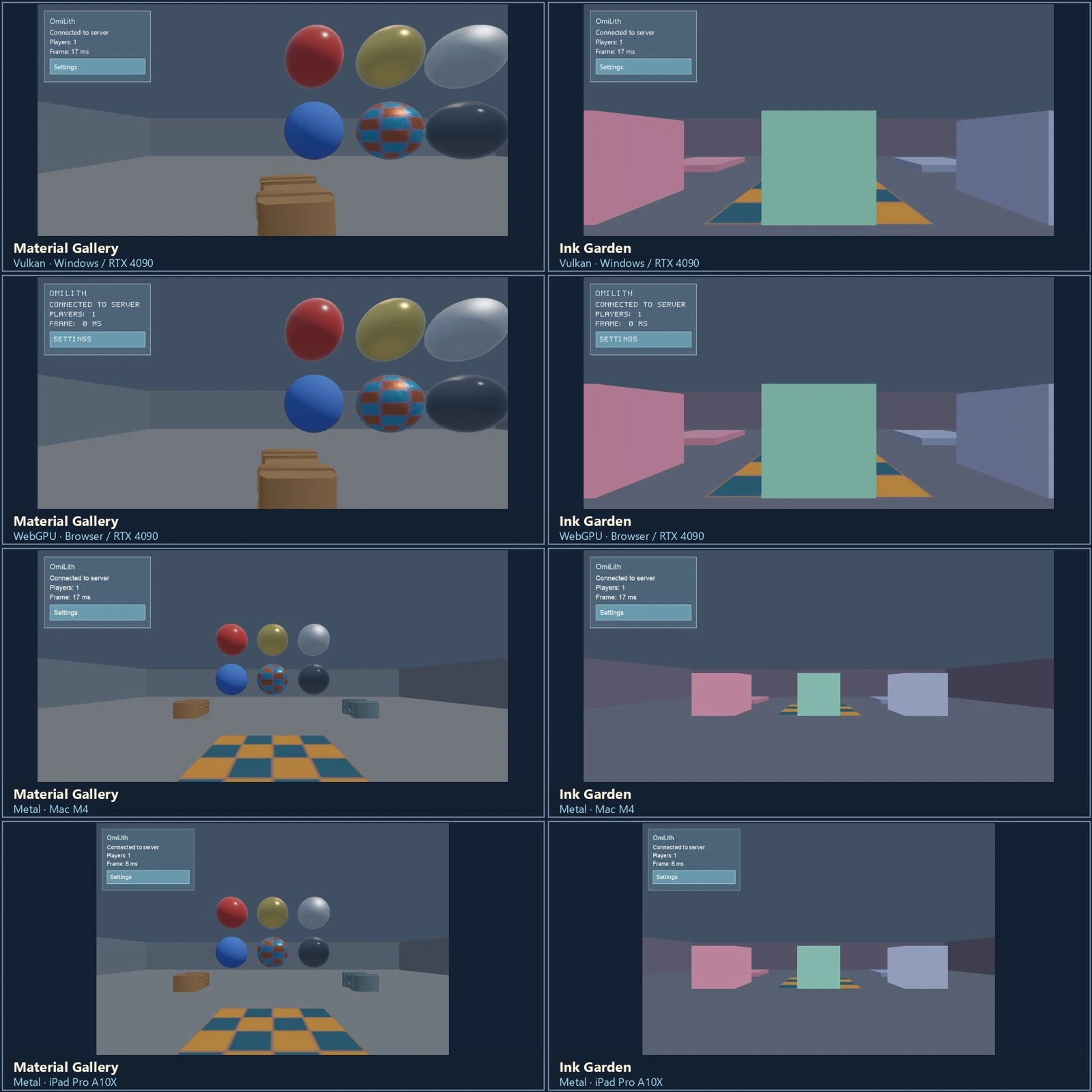
This part of the history brought several foundations together: Luau-based behavior and remote device tooling, authenticated internet play, and the materials milestone. The useful result was not a longer list of rendering effects. It was a way to inspect the same reusable engine through more than one real consumer and more than one device.
A second consumer exposes assumptions
Material Gallery exercised GGX lighting and image-based lighting, while Ink Garden used a deliberately different toon treatment. The diary records consumer-owned mesh changes being cooked and observed through a running authority/client route. That is a stronger boundary check than changing an engine-only demonstration: the game owns its content, while the engine supplies the machinery needed to render and interact with it.
The material review was completed and merged on 11 October. Its recorded scope included desktop, browser, Mac, iPad, phone, and Quest checks. That statement belongs to that milestone and its available-device evidence; it is not a blanket release-readiness claim for every future scene.
Light lists and shadows were the next questions
The lighting work was still progressing across this window. An early clustered-light slice built lists on the CPU while the fuller graph-buffer and GPU route remained unfinished. Shadow captures exposed the authored sun and spotlight from different camera angles. Those images were useful because their labels described what was actually selected.
Some later review results fall outside this three-day period. The next devlog carries those later checkpoints rather than rewriting the end of this window as if every acceptance gate had already closed.
The deeper notes explain the render-plan and budget relationship and why cross-platform evidence is a matrix. They retain the distinction between a visible result, a measured result, and a completed review.
Have a thought or a question?
I'd love to hear it. ↗